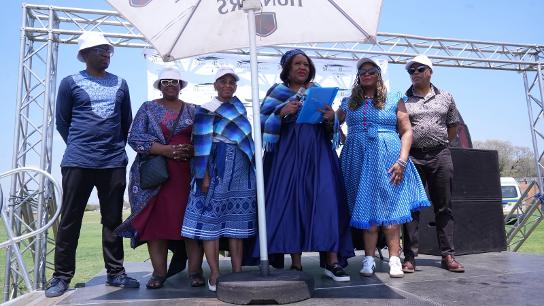
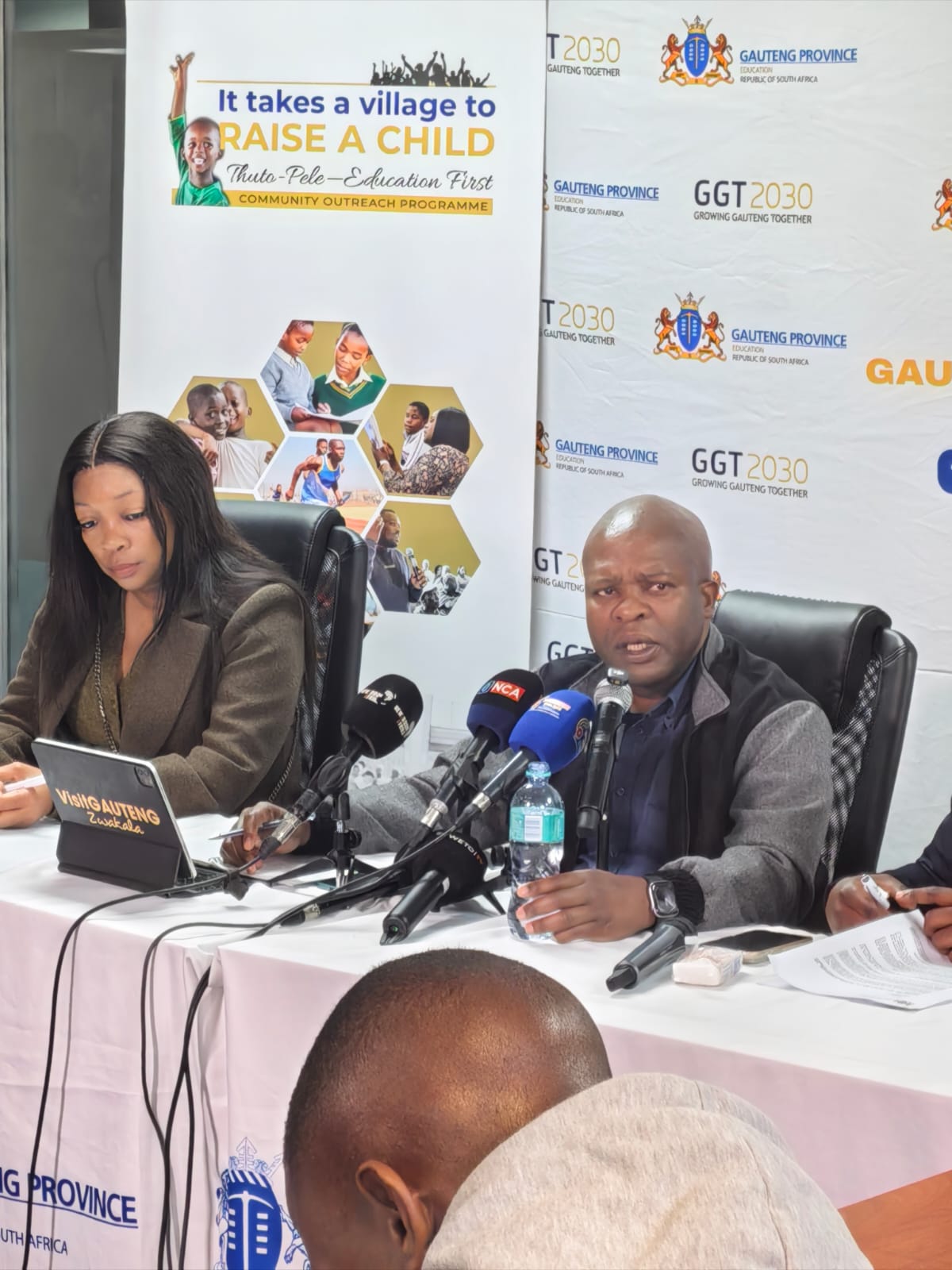
GAUTENG MEC FOR EDUCATION, SPORT, ARTS, CULTURE AND RECREATION,LEBOGANG MAILE, PROVIDES A POST-CONSULTATIVE REPORT ON THE “IT TAKES A VILLAGE TO RAISE A CHILD” OUTREACH PROGRAMME INTRODUCTION

IT TAKES A VILLAGE TO RAISE A CHILD – ONE OF GAUTENG’S LARGEST EDUCATION-
FOCUSED PUBLIC PARTICIPATION PROGRAMMES
The future of the African child cannot be secured by government alone. It demands a united society in
which parents, families, educators, school governing bodies, traditional leaders, religious institutions,
municipalities, law enforcement agencies, civil society, business, artists, athletes, libraries, community
organisations and every resident accepts responsibility for nurturing, protecting and empowering our
children. The African proverb, “It takes a village to raise a child,” is not merely an expression of culture;
it is a practical governance philosophy that recognises that the education and development of every
child is a collective responsibility. It is precisely this understanding that informed our provincial outreach
programme, through which we deliberately moved government from offices into communities to listen,
engage, account and jointly develop solutions facing the future of our children with the people of
Gauteng.
Our outreach programme has demonstrated beyond doubt that communities possess valuable
knowledge about the challenges facing education, sport, arts, culture and recreation. Government
policies become more effective when informed by the lived experiences of parents, learners,
educators, coaches, artists, librarians, volunteers and community members. During this period, we
deliberately visited schools, sports hubs, libraries, communities and educational institutions because
public participation is not simply a constitutional obligation; it is one of the strongest instruments for
building developmental governance and restoring confidence in public institutions. The Constitution of
the Republic of South Africa places the best interests of the child at the centre of all matters concerning
children, while Section 29 guarantees every learner the right to basic education. These constitutional
obligations compel every sphere of government to work together in ensuring that every African child
enjoys equal opportunities regardless of where they are born.
Between May and July 2026, our departments, that of Education and Sport, Arts, Culture and
Recreation, planned 127 engagements and institutional visits, comprising community meetings, sports
hub engagements, unannounced school visits and learner support programmes. During the reporting
period, we successfully conducted 90 engagements, including 41 community meetings, 25
unannounced school visits and 24 sports hub visits, reaching 11 294 people through direct, unmediated
interactions, physically across Gauteng. Through our digital communication platforms, our educational
programmes generated more than 10.2 million views and impressions, attracting 90 733 direct public
engagements and interactions. When education and sport platforms are considered together, millions
more citizens were reached through departmental communication initiatives. Overall, our engagement
programme directly and indirectly connected government with well over ten million Gauteng residents,
creating one of the largest education-focused public participation initiatives undertaken by our
Province.
These engagements reaffirmed that education cannot be separated from the broader social conditions
within which children grow. Communities consistently reminded us that poor infrastructure, crime,
unemployment, family instability, substance abuse, gangsterism, inadequate recreational facilities,
weak school governance, corruption, inadequate learner support and social inequality all influence
educational outcomes. This understanding aligns directly with the National Development Plan 2030,
the Gauteng Medium-Term Development Plan, the Education Action Plan to 2029 and the National
School Safety Framework, all of which recognise that improving educational outcomes requires an
integrated developmental approach rather than isolated departmental interventions.
Throughout the engagements, communities repeatedly emphasised concerns relating to learner
discipline, bullying, violence inside and outside schools, gangsterism, drug abuse, vandalism of
schools, deteriorating municipal infrastructure, overcrowding, learner admissions, delayed
maintenance, sports infrastructure, arts development opportunities, Early Childhood Development
registration, inclusive education, corruption in school finances and the need for stronger parental
involvement. These concerns were remarkably consistent across districts, demonstrating that although
communities may differ geographically, the challenges affecting African children remain
interconnected.
SAFE SCHOOLS REQUIRE SAFE COMMUNITIES
Perhaps no issue received more attention during our community engagements than school safety.
Regardless of district, parents, educators, learners, faith-based organisations and community leaders
consistently raised concerns about crime, violence, bullying, gangsterism, substance abuse,
vandalism, weapons, intimidation and gender-based violence affecting schools and surrounding
communities. These concerns reinforce an undeniable reality: learning cannot flourish where fear
dominates. The future of the African child depends on creating environments where every learner feels
physically safe, emotionally secure and socially valued.
The National School Safety Framework recognises that school safety extends beyond preventing
crime. It promotes a whole-school approach that combines prevention, early intervention, psychosocial
support, community participation, learner wellbeing, effective reporting systems and coordinated
responses from all stakeholders. It further recognises that school violence cannot be addressed by
education departments acting alone but requires collaboration between schools, parents,
communities, the South African Police Service, social workers, municipalities, health professionals and
civil society organisations.
The findings emerging from our own provincial research mirror what communities have been telling us
throughout the “It Takes a Village to Raise a Child” programme. Learners identified community
violence, neighbourhood crime, inadequate resources, peer influence and weak community support
structures as some of the factors undermining school safety interventions. They further acknowledged
that violence affects academic performance, learner wellbeing and educational outcomes. These
findings reaffirm that the classroom cannot be separated from the broader social environment in which
learners grow and develop.
National research has reached similar conclusions. Studies on school violence continue to
demonstrate that bullying, assault, intimidation, exposure to drugs, fear and community violence
negatively affect learner attendance, concentration, educational achievement and emotional wellbeing.
Importantly, these studies show that schools experiencing high levels of violence often reflect the
conditions prevailing within surrounding communities. This confirms that protecting children requires
transforming communities just as much as transforming schools.
Communities therefore challenged government to strengthen visible policing around schools, improve
collaboration with Community Policing Forums, intensify anti-drug campaigns, expand psychosocial
support, improve learner discipline and ensure that school infrastructure is protected from vandalism
and criminal syndicates. These proposals align with government’s own strategic priorities. We continue
strengthening partnerships with SAPS through school safety initiatives, improving intelligence sharing
where criminal activities threaten educational institutions and expanding preventative interventions
aimed at addressing the root causes of violence before they escalate into criminal behaviour.
However, policing alone cannot solve violence. Communities themselves repeatedly acknowledged
that parental responsibility has weakened in many instances. Children spend only part of their day
within educational institutions. The values that shape discipline, respect, compassion, patriotism,
responsibility and accountability are first cultivated within families and communities. Every parent must
therefore become an active participant in the educational journey of their child. Attending school
meetings, monitoring learner attendance, supervising homework, protecting schools from vandalism
and promoting positive behaviour are not optional responsibilities; they are fundamental obligations
arising from our collective duty to protect future generations.
One of the strongest messages emerging from our engagements is that social cohesion must become
the foundation of educational development. Schools cannot succeed where communities are
fragmented by crime, violence, unemployment, substance abuse, gender-based violence and social
disintegration. Learners need communities characterised by solidarity rather than division, cooperation
rather than conflict, hope rather than despair.
This is precisely why our work deliberately integrates education with sport, arts, culture, recreation and
libraries. Every sports hub established by government creates opportunities for young people to
channel their energy towards excellence rather than criminality. Every library constructed strengthens
literacy while creating safe learning environments after school hours. Every cultural centre preserves
African identity while nurturing creativity, innovation and entrepreneurship. Every recreational facility
contributes towards healthier lifestyles while strengthening social cohesion among communities.
The importance of sport and recreation extends far beyond physical fitness. Through sport, young
people learn discipline, teamwork, leadership, perseverance, respect and resilience. Sporting
environments also reduce vulnerability to gangsterism, drugs and anti-social behaviour by providing
structured developmental opportunities. Similarly, arts and culture create platforms through which
young people express themselves, preserve heritage, strengthen identity and contribute meaningfully
to South Africa’s growing creative economy.
One of the strongest messages from communities was that schools cannot become islands surrounded
by communities experiencing violence, crime and social instability. Where neighbourhoods are
characterised by gangsterism, substance abuse and criminal activity; learners inevitably carry those
experiences into classrooms. Research commissioned on school violence confirms that community
characteristics significantly influence violence inside schools, while learner academic performance is
directly affected by unsafe learning environments. The National School Safety Framework similarly
recognises that school safety extends beyond school fences and requires cooperation between
education authorities, the South African Police Service, municipalities, parents and communities.
For this reason, our response extends beyond employing security measures. We continue
strengthening partnerships with the South African Police Service (SAPS), Community Policing Forums
(CPFs), municipalities, social workers, psychologists, School Governing Bodies and local leadership
structures to build preventative rather than reactive interventions. Safe schools require safe
communities, and safe communities require active citizens who refuse to tolerate criminality around
educational institutions. Every parent, every neighbour and every community organisation has a
responsibility to protect schools because they remain sacred spaces dedicated to the development of
future generations.
Communities also expressed concern regarding increasing incidents of bullying, gender-based
violence, learner misconduct and behavioural challenges. These concerns reinforce the importance of
implementing learner support programmes, psychosocial interventions, positive discipline, values-
based education and stronger collaboration with families. The National School Safety Framework
provides practical mechanisms through which schools identify risks, establish reporting systems,
develop school safety plans and strengthen community participation. Our responsibility as government
is, therefore, not only to enforce discipline but to build caring school environments where learners feel
safe, respected and supported.
GOVERNMENT MUST BUILD ENVIRONMENTS ENCOURAGING READING, SPORTING
EXCELLENCE, ARTISTIC EXPRESSION AND LIFELONG LEARNING
Another recurring concern related to the deterioration of public infrastructure supporting learning,
recreation and culture. Communities correctly argued that libraries, sports hubs, theatres, arts centres
and recreational facilities are educational infrastructure in their own right because they provide safe
developmental spaces after school hours. We, therefore, continue investing in new community
libraries, maintenance of existing facilities, refurbishment of combi courts, upgrades to theatres and
broader recreational infrastructure across Gauteng. Although certain projects have experienced delays
due to community disruptions, procurement processes and contractual challenges, the Department
remains committed to accelerating implementation because infrastructure investment is ultimately an
investment in human development rather than simply construction projects.
Our infrastructure programme demonstrates that government must build environments that encourage
reading, sporting excellence, artistic expression and lifelong learning. Libraries improve literacy, sports
hubs reduce youth vulnerability to crime and substance abuse, while cultural facilities preserve African
heritage and stimulate the creative economy. Every rand invested in educational and recreational
infrastructure, therefore, contributes directly towards protecting the future of the African child.
ALL GAUTENG CHILDREN DESERVE ACCESS TO QUALITY EDUCATION
The outreach programme also confirmed that one of the greatest concerns confronting our
communities is equitable access to quality education. Parents consistently raised frustrations relating
to learner admissions, overcrowding in high-demand schools, classroom shortages and the pressure
created by rapid urbanisation. Gauteng remains South Africa’s economic hub and continues to attract
thousands of families seeking better opportunities. While migration reflects confidence in our Province,
it also places extraordinary pressure on schools, infrastructure and learner placement systems. These
realities require government to continuously modernise its planning, strengthen intergovernmental
coordination and improve the efficiency of service delivery.
For this reason, the Gauteng Provincial Government continues strengthening the Online Admissions
System as a strategic intervention to improve transparency, fairness and planning. Communities were
assured that the Department of Education and the Department of e-Government are working jointly to
stabilise digital admissions, improve system resilience and ensure that every qualifying learner is
placed as efficiently as possible. The implementation process involves coordinated work between
technical specialists, procurement structures, legal services and technology partners to ensure that
digital transformation supports the constitutional right to education.
Technology alone, however, cannot resolve educational challenges. Communities reminded us that
quality education still depends on adequate classrooms, sufficient educators, learning materials,
electricity, water, sanitation, transport infrastructure and functional municipal services. This reinforces
the importance of cooperative governance as envisaged by Chapter 3 of the Constitution, where all
spheres of government are expected to coordinate planning and implementation instead of operating
in isolation. Municipalities, provincial departments, national government entities and public institutions
each have distinct responsibilities that collectively determine whether learners experience a conducive
environment for learning.
CENTRALITY OF INFRASTRUCTURE DELIVERY
Infrastructure emerged as another dominant issue during our engagements. Communities welcomed
government investment in new libraries, sports facilities, theatres and educational infrastructure but
appealed for faster implementation, better maintenance and stronger protection of public assets
against vandalism and criminality. These concerns are justified because infrastructure is more than
bricks and mortar; it creates opportunities for literacy, recreation, cultural development, innovation and
social cohesion.
We continue implementing infrastructure projects which encapsulate the construction of new
community libraries, maintenance of existing libraries, refurbishment of community facilities, upgrades
to recreational infrastructure and the rehabilitation of sports facilities across Gauteng. New library
developments, maintenance programmes, archives infrastructure, theatre improvements and the
refurbishment of combi courts represent deliberate investments in creating safe developmental spaces
for children and young people. Although some projects have experienced delays because of
procurement processes, contractual non-compliance and community disruptions, corrective
interventions are underway to restore momentum and improve delivery.
Communities equally emphasised that sport, arts, culture and recreation are not luxuries but essential
developmental instruments. Sports hubs provide structured alternatives to crime, drugs and
gangsterism while identifying future champions. Libraries encourage reading and lifelong learning. Arts
centres preserve African identity, promote creativity and create pathways into the creative economy.
Recreational facilities strengthen physical wellbeing while promoting social cohesion among young
people from different communities. The African child must therefore be viewed holistically. We cannot
expect improved educational outcomes while neglecting the environments that shape social
development beyond the classroom.
EARLY LEARNING ESSENTIAL FOR LIFELONG LEARNING
Early Childhood Development (ECD) featured prominently throughout our engagements. Parents,
practitioners and community organisations consistently called for greater support to ECD centres,
simplified registration processes, improved infrastructure and increased investment in practitioner
development. These concerns reinforce government’s strategic direction because evidence
consistently demonstrates that the earliest years of life determine educational success throughout the
schooling system.
The Gauteng Department of Education has, therefore, prioritised the stabilisation and expansion of the
ECD sector through the Bana Pele Mass Registration Drive, strengthening registration systems,
improving compliance support, expanding access to quality programmes and increasing learning
resources. Gauteng currently has 3 114 Early Learning Programmes on the departmental master list,
supporting approximately 134 763 children with more than 11 200 practitioners, while thousands of
additional facilities continue progressing through registration processes. The Province also supports 1
415 public schools offering Grade R, serving approximately 137 300 Grade R learners as part of the
broader objective of universalising quality early learning.
These interventions are firmly grounded in the Children’s Act 38 of 2005, the National Integrated Early
Childhood Development Policy, the South African Schools Act as amended, the National Curriculum
Framework for Birth to Four and the Education Action Plan to 2029. Together, these policy instruments
recognise that education begins long before Grade 1. Protecting the African child therefore requires
investment from birth through adulthood, ensuring that every developmental milestone is supported by
quality care, stimulation, nutrition, safety and learning opportunities.
QUALITY EDUCATION MUST NOT LEAVE ANY CHILD BEHIND
Communities further reminded us that inclusive education must become a lived reality rather than a
policy aspiration. Parents of learners with disabilities consistently appealed for improved access to
specialised services, assistive devices, learner transport, therapeutic support and schools closer to
where families reside. Government accepts this responsibility because every learner deserves equal
access to quality education irrespective of disability or learning barriers.
Gauteng continues strengthening inclusive education through a differentiated support model that
provides varying levels of assistance according to learner needs. The Province currently supports
approximately 2.8 million learners across about 2 200 public schools, including 131 special schools,
30 special schools functioning as resource centres, 51 designated Full-Service Schools, with a further
60 public schools being prepared for Full-Service status. Inclusive education is further supported by
236 Learner Support Educators, approximately 670 specialist support personnel, including therapists
and nurses, 135 district inclusion officials, and educational psychologists working across districts to
strengthen learner support systems. More than 43 000 learners currently receive specialised education
within Gauteng’s special schools, while thousands more are supported within ordinary public schools
through the Screening, Identification, Assessment and Support (SIAS) Policy.
Inclusive education is not charity. It is the practical implementation of equality, dignity and human rights
as guaranteed by the Constitution. It also reflects the values of Ubuntu and African solidarity,
recognising that society is judged not by how it treats the strongest, but by how it protects the most
vulnerable. When a child with a disability receives the support necessary to succeed, society itself
becomes stronger.
ACCOUNTABILITY AND GOOD GOVERNANCE IMPORTANT TO FUNCTIONAL SCHOOLS
Communities also emphasised that educational quality depends on ethical leadership and sound
governance. Parents repeatedly demanded stronger accountability for the management of school
finances, procurement processes and public resources. They made it clear that corruption steals
directly from children because every misappropriated rand reduces opportunities for teaching,
infrastructure, learner support and educational development.
Government shares these concerns unequivocally. Investigations continue into cases involving alleged
financial misconduct by principals, School Governing Body members and other officials. These matters
include allegations of procurement irregularities, unauthorised expenditure, abuse of school finances
and failures to comply with statutory financial management responsibilities under the South African
Schools Act and other applicable legislation. Where evidence confirms wrongdoing, disciplinary action,
criminal investigation and recovery processes are pursued without fear or favour because corruption
is incompatible with quality education and developmental governance.
Every school principal, every School Governing Body member and every public servant entrusted with
public resources carries a constitutional and moral responsibility to safeguard those resources on
behalf of children. Public funds belong to learners. Misusing them is not simply financial misconduct it
is the theft of opportunity from the African child.
MUNICIPAL SUPPORT INTEGRAL FOR EFFECTIVE TEACHING AND LEARNING
Communities also consistently raised concerns regarding deteriorating municipal services affecting
schools, including unreliable water supply, electricity interruptions, poor road infrastructure, illegal
dumping, inadequate street lighting and environmental degradation surrounding educational
institutions. These matters fall beyond the mandate of any single department, reinforcing the
importance of intergovernmental collaboration as a constitutional principle of governance.
For this reason, our approach increasingly depends on coordinated planning between provincial
departments, municipalities, national government, state-owned entities and community leadership
structures. Educational infrastructure cannot function without reliable municipal services. Learner
safety cannot be guaranteed without effective policing. School nutrition depends on functioning supply
chains. Learner wellness requires collaboration between Education, Health and Social Development.
Recreational facilities require support from municipalities and infrastructure agencies. The
developmental needs of the African child therefore demand integrated governance rather than
fragmented administration.
The same integrated approach applies to educational infrastructure itself. Communities repeatedly
expressed appreciation for investments in schools, libraries, sports facilities and cultural infrastructure
while calling for faster implementation, improved maintenance and stronger protection of public assets.
Government has responded by continuing the implementation of infrastructure projects that include
new libraries, maintenance of existing facilities, refurbishment of theatres, archives, recreational
infrastructure and sports facilities. These investments are intended not merely to improve physical
infrastructure but to create environments where learning, creativity and community participation can
flourish together.
MENTAL HEALTH OF LEARNERS AND TEACHERS A NON-NEGOTIABLE
Another issue consistently raised during community engagements concerned learner wellbeing and
psychosocial support. Parents, educators and learners emphasised increasing anxiety, depression,
trauma and behavioural challenges affecting children. These concerns are understandable given the
socio-economic pressures confronting many households. Government therefore continues
strengthening learner support through psychologists, social workers, learner support educators,
district-based support teams and partnerships with health and social development professionals.
Educational success cannot be measured solely through examination results while ignoring the
emotional wellbeing of learners.
Equally important is strengthening the moral and ethical foundation upon which education rests.
Communities repeatedly emphasised the need to restore values such as respect, honesty,
responsibility, discipline, patriotism, compassion and service. Schools remain institutions of academic
excellence, but they are equally institutions responsible for producing ethical citizens capable of
contributing positively to society. The African child must therefore leave school not only with knowledge
and qualifications, but also with character, integrity and a commitment to nation-building.
Ultimately, the evidence gathered throughout our outreach programme confirms that every challenge
confronting education is interconnected. School safety depends on community safety. Educational
quality depends on infrastructure. Learner performance depends on psychosocial wellbeing. Sports
development depends on facilities. Creative excellence depends on cultural investment. Inclusive
education depends on specialised support. Early childhood development determines future
educational success. Good governance protects resources meant for children. Strong communities
produce strong schools, and strong schools produce stronger communities.
This integrated understanding is precisely what the “It Takes a Village to Raise a Child” initiative has
sought to build across Gauteng.
ALL OF US HAVE A ROLE TO PLAY IN RAISING THE AFRICAN CHILD
As we conclude this phase of the “It Takes a Village to Raise a Child” community engagement
programme, we do so with renewed conviction that the greatest investment any nation can make is
not in buildings, roads or technology alone, but in the comprehensive development of its children.
Every policy we implement, every library we build, every school we maintain, every sports hub we
establish, every cultural programme we support and every Early Childhood Development centre we
strengthen is ultimately an investment in the future of Gauteng and South Africa.
The conversations we held across communities demonstrated that parents, educators, learners,
artists, coaches, librarians, faith-based organisations, business leaders, traditional leaders, community
activists and ordinary residents all share one common aspiration: they want every child to succeed.
They may express their concerns differently, but the underlying message remains consistent.
Communities want safe schools. They want ethical leadership. They want accountable government.
They want functioning infrastructure. They want inclusive education. They want opportunities for sport,
arts and culture. Above all, they want children to inherit a society that offers hope rather than
hopelessness.
Our engagements have therefore reaffirmed an important truth. Educational transformation cannot be
reduced to examination results alone. A child who is hungry cannot learn effectively. A child living in
fear cannot reach his or her full potential. A child without access to books, libraries, recreation or
creative opportunities cannot fully develop his or her talents. A child excluded because of disability is
denied constitutional justice. A child exposed to corruption loses confidence in public institutions. A
child raised in communities overwhelmed by crime, gangsterism and substance abuse faces obstacles
far beyond the classroom. These realities remind us that education is inseparable from the broader
social, economic and moral condition of society.
For this reason, the Gauteng Provincial Government continues implementing an integrated
developmental approach aligned with the Constitution, the National Development Plan 2030, the
Gauteng Medium-Term Development Plan, the Education Action Plan to 2029, the South African
Schools Act, the Basic Education Laws Amendment Act, the Children’s Act, the National Integrated
Early Childhood Development Policy, the Screening, Identification, Assessment and Support Policy,
the National School Safety Framework and other legislative and policy instruments that collectively
seek to improve the lives of children.
The issues raised by communities have directly informed our programme of action. Concerns
regarding overcrowding continue to shape infrastructure planning and learner placement strategies.
Calls for safer schools reinforce strengthened partnerships with the South African Police Service and
community safety structures. Appeals for stronger learner support continue to expand psychosocial
services and inclusive education programmes. Requests for improved municipal services have
intensified collaboration with municipalities and other organs of state. Calls for greater recreational
opportunities continue informing investments in sports hubs, libraries, arts infrastructure and
community facilities. Concerns regarding corruption continue strengthening governance, oversight,
investigations and accountability mechanisms. Every concern raised has therefore become an
opportunity for improving public policy and strengthening service delivery.
Equally important, our engagements have reminded us that government cannot legislate responsible
parenting, neighbourliness or community solidarity. These are social responsibilities that must be
embraced voluntarily by every citizen. We therefore call upon every parent to know where their children
are after school. We call upon communities to protect schools, libraries and sports facilities from
vandalism and criminality. We call upon businesses to continue investing in education, sport and skills
development. We call upon religious institutions to strengthen moral formation among young people.
We call upon artists, authors, musicians and cultural practitioners to use their talents to inspire hope,
preserve African heritage and promote social cohesion. We call upon retired educators and
professionals to mentor young people. We call upon young people themselves to reject violence,
gangsterism, drugs and criminality, and instead embrace education, discipline, patriotism, innovation
and service.
The future of the African child is too important to become the responsibility of government alone.
Our outreach programme has shown that the willingness to participate already exists within
communities. During this reporting period, 11 294 residents participated physically in meetings and
engagements across Gauteng, while our communication initiatives generated more than 10.2 million
digital views and impressions, accompanied by over 90 700 direct online interactions. When education
and sport, arts, culture and recreation communication platforms are considered together, the initiative
reached well over ten million people, creating one of the broadest public conversations on the future
of education and child development ever undertaken in Gauteng. These figures demonstrate not only
the scale of the programme but also the willingness of communities to become active partners in
shaping educational policy and protecting future generations.
The significance of these numbers extends beyond statistics. Every meeting represented parents
choosing participation over indifference. Every school visit represented accountability over
bureaucracy. Every sports hub engagement represented opportunity over social exclusion. Every
library visit represented knowledge over ignorance. Every conversation about Early Childhood
Development represented hope over inequality. Every discussion on inclusive education represented
dignity over discrimination. Every intervention against violence represented courage over fear.
Together, these engagements demonstrate that public participation remains one of the most powerful
instruments for strengthening democracy and improving developmental governance.
We have also learnt that the challenges confronting children do not exist in isolation. Infrastructure,
governance, curriculum delivery, safety, inclusion, health, social development, sport, arts, recreation
and economic opportunity are interconnected. This understanding demands that government itself
must become increasingly integrated in the manner in which it plans, budgets and delivers services. It
equally demands that communities reject the notion that education belongs only to schools. Education
belongs to society.
History teaches us that no civilisation has prospered by neglecting its children. Likewise, no nation has
overcome poverty, unemployment, inequality or violence without investing deliberately in education
and human development. Our learners represent not merely the future of individual families but the
future of our democracy, our economy, our cultural heritage and our national identity. Every child we
protect today becomes tomorrow’s teacher, doctor, artisan, entrepreneur, scientist, athlete, artist,
engineer, farmer, public servant or community leader.
As government, we therefore reaffirm our commitment to building modern schools, expanding access
to quality Early Childhood Development, strengthening inclusive education, protecting public resources
from corruption, improving school safety, expanding sports and recreation opportunities, investing in
libraries and cultural infrastructure, supporting artists and athletes, strengthening partnerships with
municipalities and communities, and ensuring that every learner enjoys the constitutional right to
quality education in a safe and supportive environment.
But we equally reaffirm that government alone cannot raise a child. Parents cannot delegate parenting
to schools. Schools cannot replace families.
Communities cannot remain silent when children are exposed to crime and violence. Religious
institutions cannot disengage from moral leadership. Business cannot prosper while neglecting future
generations.
Every South African has a responsibility to become part of the village. That is the enduring lesson
emerging from every community we visited. That is the philosophy that continues to guide our work.
That is the foundation upon which we shall continue building a safer, more educated, more inclusive,
more creative and more prosperous Gauteng.
Because when a village stands together, every child stands a better chance. And when every child
succeeds, the nation succeeds.
SUPPLIED.