PUTTING THE “RAPID” BACK IN BUSRAPID TRANSIT
Why Rea Vaya Still Matters
At its core, Rea Vaya is about more than buses. It’s about a vision of inclusive, connected, and climate-smart cities. The system plays a critical role in:
· Reducing traffic congestion and vehicle emissions.
· Making public transport accessible, safe, and affordable.
· Supporting economic growth and job creation.
· And transforming the minibus taxi industry into formal, prosperous transport businesses.
· A Future in Motion.
Key features that distinguish BRT from regular bus services
Dedicated Lanes: BRT systems often have dedicated lanes that are separate from regular traffic, allowing buses to avoid congestion and maintain consistent speeds
Priority at Intersections: BRT buses are given priority at traffic signals, reducing delays caused by other vehicles.
Off-Board Fare Collection: Passengers pay their fares at the station before boarding, which speeds up the boarding process and reduces delays.
· Platform-Level Boarding: Stations are designed with platforms at the same height as the bus floor, making it easier and faster for passengers to board and alight, including those with disabilities.
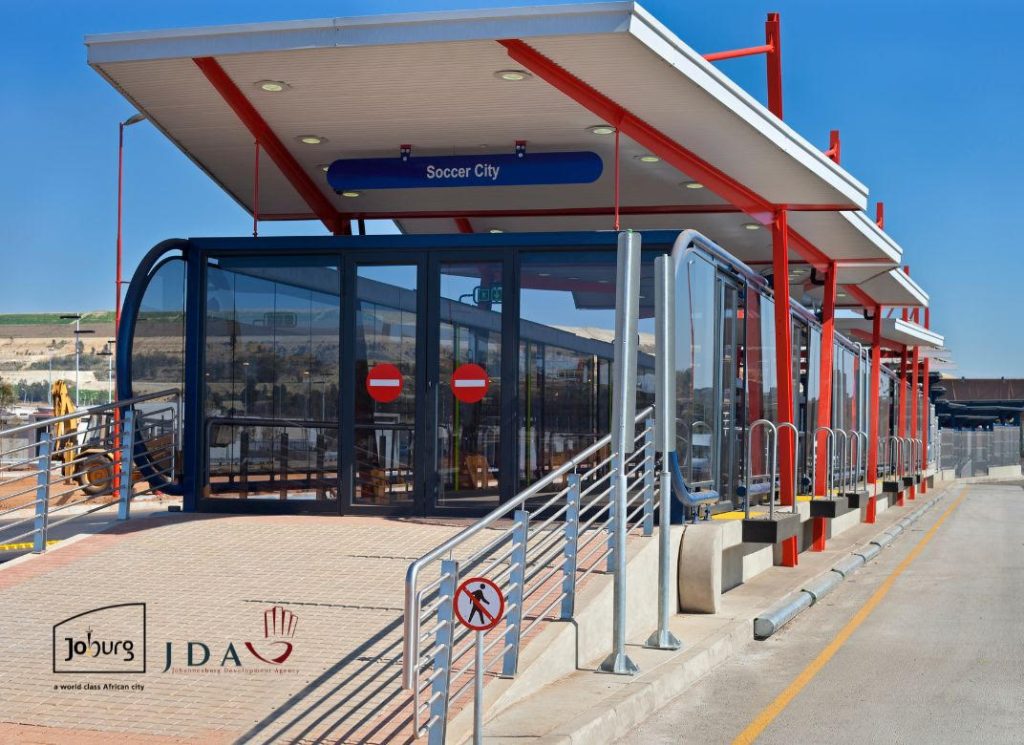
Enhanced Stations: BRT stations are often more substantial than regular bus stops, providing amenities such as seating, lighting, and real-time information displays.
Empowering SMMEs, Supporting Taxi Associations and Community Support
One of the standout successes of the Rea Vaya project has been its impact on Small, Medium, and Micro Enterprises (SMMEs). The construction and operational phases of the BRT system created numerous opportunities for local businesses.
Contracts for bus stations and other infrastructure were awarded to local SMMEs, boosting their growth and sustainability in regions. Additionally, the project facilitated training and development programs, equipping entrepreneurs with the skills needed to thrive in a competitive market.
The integration of taxi associations into the Rea Vaya system has been another significant achievement. Initially, there were concerns about how the BRT system would affect the livelihoods of taxi operators.
However, through extensive consultations and negotiations, the City of Johannesburg Transport Department ensured that taxi associations were not only included but also benefited from the project. Many taxi operators were offered shares in the bus operating companies, providing them with a stable income and a stake in the new transport system.
This collaboration has helped to reduce competition and foster a more cooperative transport environment in Johannesburg.
There are some inspiring stories about the collaboration between the Bus Rapid Transit (BRT) system and taxi associations in Johannesburg. Here are a few highlights:
1. Transformation of the Taxi Industry: The introduction of the Rea Vaya BRT system has led to significant changes in the taxi industry. Many former minibus taxi drivers have transitioned to become BRT drivers, gaining formal employment with better job security and benefits. This shift has provided a more stable livelihood for these drivers and improved their quality of life.
2. Improved Commuter Experience: Commuters have reported a safer and more reliable travel experience with the Rea Vaya buses compared to the informal minibus taxis. For instance, Selinah Ndlovu, a shop assistant in Soweto, shared how the BRT system has made her daily commute safer and more convenient. This has been a significant improvement for many residents who previously faced challenges with the informal taxi system.
3. Economic Empowerment: The collaboration between the city and taxi associations has also led to economic empowerment. Taxi associations have been given opportunities to participate in the BRT system, ensuring they benefit from the new transport infrastructure. This has helped to create a more inclusive and sustainable public transport system.
4. Community Support: The BRT system has received positive feedback from the community for its role in reducing traffic congestion and providing a more organized public transport option. This has been particularly beneficial in densely populated areas like Soweto, where the demand for reliable public transport is high.
These stories highlight the positive impact of the BRT system on both the taxi industry and the community in Johannesburg. It’s a great example of how collaboration and innovation can lead to meaningful improvements in public transport.
Beyond economic empowerment, the Rea Vaya project has brought numerous benefits to the broader community.
For Lutando Maboz, the Executive Director at the City of Johannesburg’s Transport Department, “The BRT system has improved accessibility to essential services, such as healthcare, education, and employment, particularly for residents in previously underserved areas. The reduction in traffic congestion and pollution has also contributed to a cleaner and healthier urban environment.
Overall, the Rea Vaya BRT project is a testament to how thoughtful urban planning and inclusive development can drive positive change. By supporting SMMEs and integrating taxi associations, the JDA has created a more equitable and prosperous Johannesburg for all its residents.
As the JDA accelerates Phase 1C (a), it reflects the City of Johannesburg’s unwavering dedication to creating a livable, competitive, and equitable city.
INFO SUPPLIED.